
7 Warning Signs Your Roof Is Leaking (Before It Gets Worse)
Learn to spot early signs of a roof leak — from water stains to musty smells. Catch problems early before they cause costly damage to your Malaysian home.
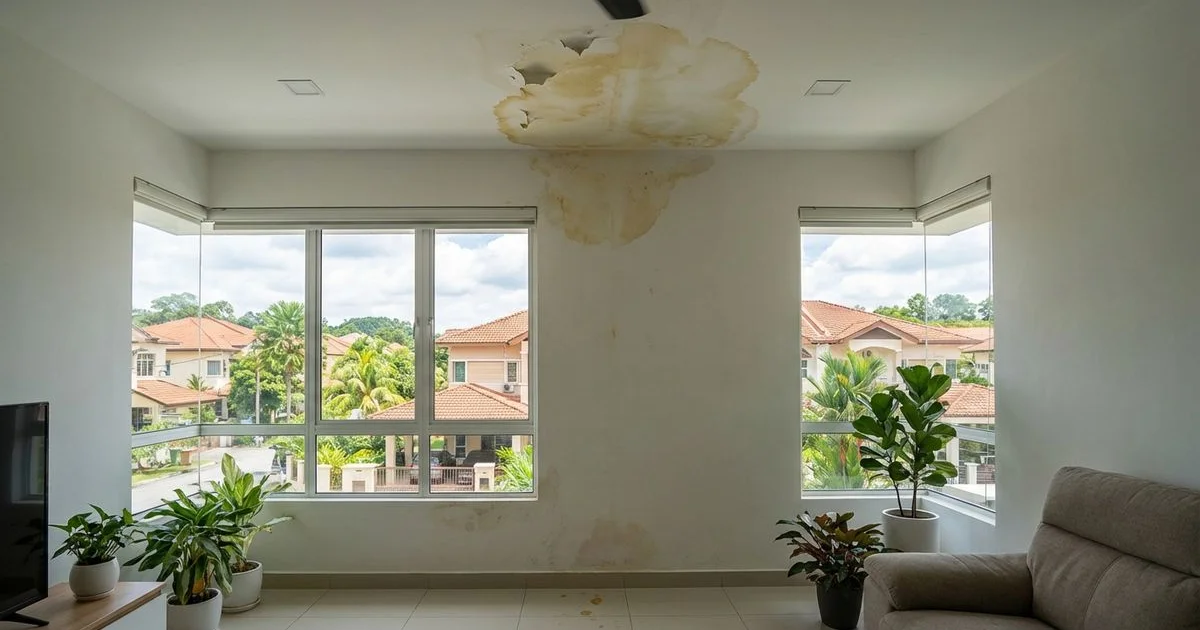
Why Catching a Roof Leak Early Matters
A roof leak rarely announces itself with a dramatic waterfall through your ceiling. In most Malaysian homes, leaks start small — a faint discolouration here, a subtle musty smell there. By the time you notice water dripping onto your living room floor, the damage behind your walls and ceiling could already be extensive.
Malaysia’s tropical climate, with its intense UV exposure and heavy monsoon rains, accelerates roof deterioration. The good news is that your roof almost always gives you warning signs before a small problem becomes a costly repair. Here are seven signs every Malaysian homeowner should watch for.
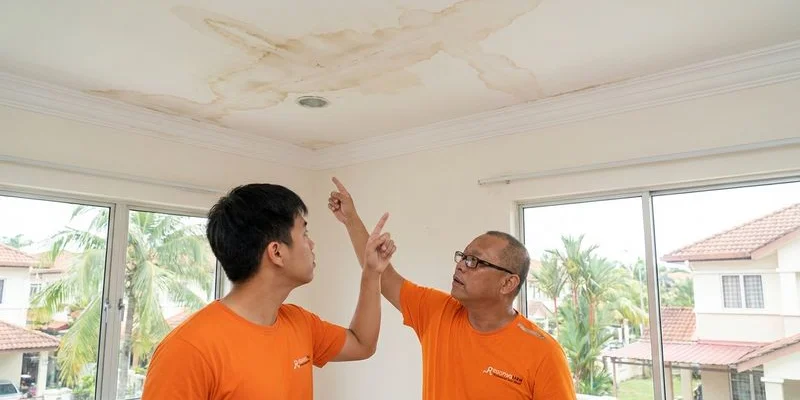
1. Water Stains on Your Ceiling or Walls
The most obvious indicator of a roof leak is brown or yellowish stains spreading across your ceiling. These stains typically have irregular edges and may grow larger after each rain. In Malaysia, where afternoon thunderstorms can be sudden and heavy, you might notice new stains appearing after particularly intense downpours.
Do not simply paint over these stains. The discolouration is a symptom, not the problem itself. The source of the leak could be metres away from where the stain appears, as water travels along rafters and ceiling joists before dripping down.
2. Musty or Mouldy Smells
Malaysia’s humidity hovers between 70% and 90% on most days. When a roof leak introduces additional moisture into your ceiling cavity, it creates the perfect environment for mould growth. If you notice a persistent musty smell in a particular room — especially one that worsens after rain — there is likely hidden moisture from a roof leak.
Health Risks of Mould
Mould is not just a structural concern. Prolonged mould exposure can trigger respiratory issues, allergies, and asthma symptoms. This is especially concerning in Malaysian homes where windows are often kept closed during air conditioning use, trapping mould spores indoors.
3. Peeling or Bubbling Paint
When water seeps behind your wall or ceiling paint, it causes the paint to lose adhesion. You will notice bubbling, peeling, or flaking paint — often in patches rather than uniformly across the surface. This is different from paint deterioration caused by normal ageing, which tends to be more even.
4. Damp or Warped Ceiling Boards
Press your hand against your ceiling in areas where you suspect a leak. If the surface feels soft, spongy, or warm to the touch, moisture has likely saturated the material. In severe cases, ceiling boards may visibly sag or warp downward. This is a serious structural warning — a waterlogged ceiling can collapse.

5. Cracked, Displaced, or Missing Roof Tiles
Walk around the exterior of your home and look at your roof from ground level. Cracked concrete tiles, displaced clay tiles, or gaps where tiles have shifted are all entry points for rainwater. In Malaysia, thermal expansion from intense daytime heat followed by rapid cooling during evening storms causes tiles to crack over time.
Common Tile Damage in Malaysia
- Concrete tiles develop hairline cracks from thermal cycling
- Clay tiles can shift or break during strong winds
- Metal roofing sheets corrode at screw points and overlaps
6. Rusted or Corroded Flashing
Flashing is the metal strips used to seal joints around chimneys, vents, skylights, and where your roof meets a wall. In Malaysia’s humid and occasionally salt-laden coastal air, flashing corrodes faster than in temperate climates. Rusted flashing creates gaps that allow water to penetrate beneath your roof covering.
7. Increased Electricity Bills
This is a sign many homeowners overlook. When moisture enters your ceiling insulation, it reduces the insulation’s effectiveness. Your air conditioning system has to work harder to cool your home, leading to higher electricity bills. If your TNB bill has crept up without an obvious explanation, a roof leak compromising your insulation could be the hidden cause.
What to Do If You Spot These Signs
If you notice one or more of these warning signs, do not delay. A small roof leak that costs RM300 to fix today can escalate to a RM5,000 ceiling replacement if left unattended through a full monsoon season.
- Document the damage — take photos and note when symptoms worsen
- Check your attic — if accessible, look for daylight coming through or wet spots on rafters
- Call a professional — a qualified roofer can trace the leak source accurately
Early detection saves money, protects your home’s structure, and keeps your family safe from mould-related health issues. Do not wait until the next monsoon to act.
Tags
Need Professional Help?
If you're dealing with this issue, our team can help. Get an honest quote today.