
5 Signs It's Time to Replace Your Roof (Not Just Repair It)
Repair or replace? Know the warning signs that indicate your roof needs a full replacement rather than another patch-up job.
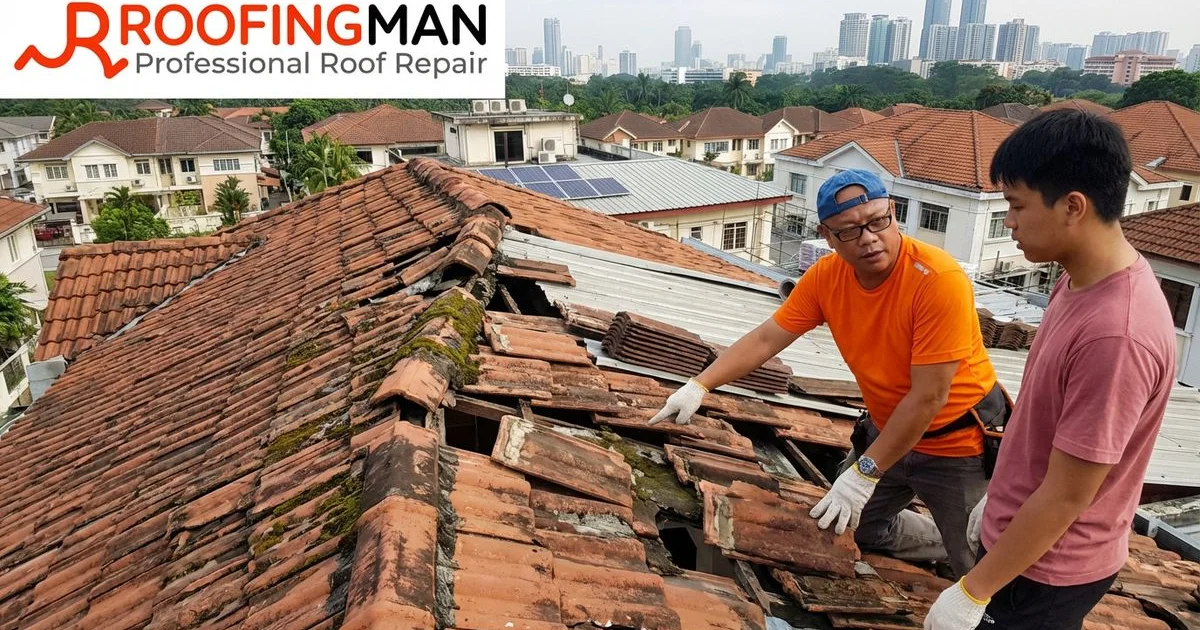
Repair or Replace: The Question Every Homeowner Eventually Faces
Every roof has a finite lifespan. No matter how well it was installed or how diligently you have maintained it, there comes a point where repairs are no longer the smart financial choice. The challenge is knowing exactly when you have crossed that line from “worth fixing” to “time for a new roof.”
Many Malaysian homeowners fall into the trap of spending thousands of ringgit on repeated repairs, patching the same roof year after year, when a full replacement would have been more cost-effective in the long run. On the other hand, some homeowners replace roofs prematurely when targeted repairs could have extended the life of their existing roof by another decade.
Here are five clear warning signs that indicate your roof needs a complete replacement rather than another repair job.
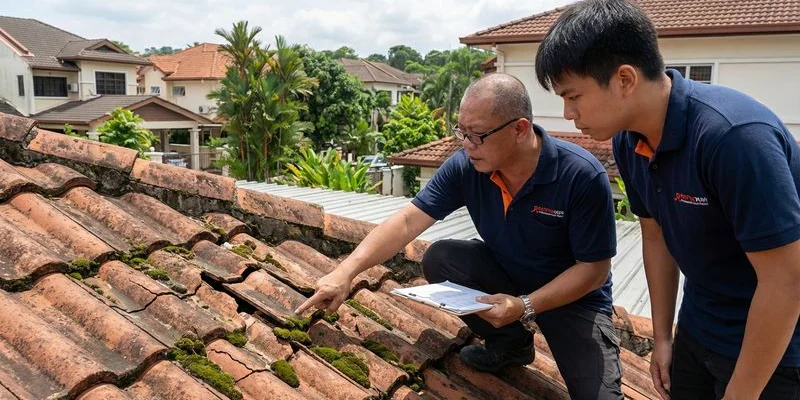
Sign 1: Your Roof Has Reached Its Expected Lifespan
Every roofing material has a typical service life, and once your roof approaches or exceeds that age, problems accelerate rapidly:
| Material | Expected Lifespan in Malaysia |
|---|---|
| Zinc sheets | 10 - 15 years |
| Concrete tiles | 20 - 30 years |
| Clay tiles | 30 - 50 years |
| Metal roofing (zincalume/colorbond) | 25 - 40 years |
Malaysia’s tropical climate — with intense UV radiation, heavy monsoon rains, and high humidity — tends to push roofs toward the lower end of these ranges compared to temperate countries.
If your roof is within five years of its expected lifespan and starting to show problems, replacement is almost certainly more sensible than repair. You are not just fixing the immediate issue; you are fighting against a roof that is deteriorating across its entire surface.
What to check: Look at your original property documents or ask the developer for the construction date. For older homes, a professional roofer can estimate the roof’s age based on the material condition, tile type, and construction methods used.
Sign 2: Widespread Damage Across Multiple Areas
A few cracked tiles in one area is a repair. Cracked, broken, and deteriorated tiles across the entire roof is a replacement.
The key distinction is whether the damage is localised or widespread:
- Localised damage (repair): A fallen branch breaks 10-15 tiles in one area. The surrounding tiles are in good condition. This is a straightforward repair job costing RM500 to RM1,500.
- Widespread damage (replace): Tiles across the entire roof are cracking, chipping, losing their surface coating, or becoming porous. Even if no single area looks terrible, the overall deterioration means problems will keep appearing in new locations faster than you can fix them.
Other signs of widespread deterioration:
- Granule loss on tiles (the protective coating has worn away, leaving tiles vulnerable to water absorption)
- Multiple tiles shifting or slipping out of position, indicating the battens underneath have weakened
- Moss and algae growth across large sections, which traps moisture and accelerates tile breakdown
- Tiles that crumble or break apart easily when handled during repairs
When your roofer is replacing tiles in one area and finding that every tile they step on is fragile, that is a roof telling you it is done.
Sign 3: The Roof Structure Is Sagging or Deforming
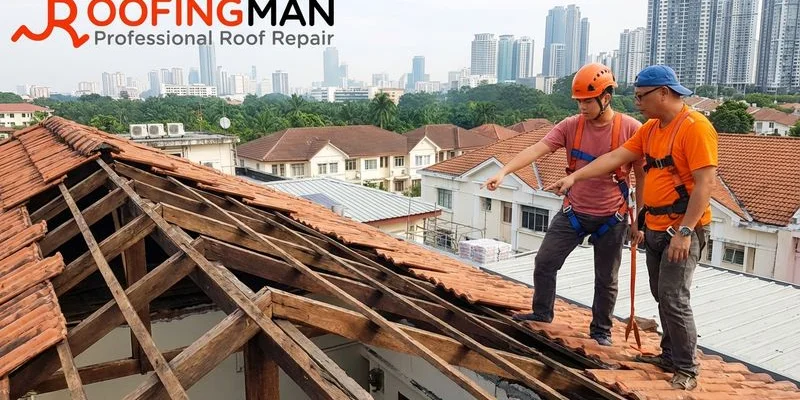
This is the most serious warning sign and one that demands immediate professional attention. A sagging roof indicates structural failure — the timber rafters, purlins, or trusses that support the roof covering are compromised.
Common causes of structural sagging in Malaysian homes:
- Termite damage: Malaysia’s tropical climate makes termite infestation extremely common. Termites can hollow out timber roof structures from the inside, leaving them looking intact externally while having lost most of their structural strength.
- Water damage and rot: Prolonged leaks that go unaddressed cause timber to rot, weakening the structural members over time.
- Overloading: Adding heavier roofing materials during a renovation without reinforcing the existing structure, or accumulating layers of waterproofing on flat roof sections.
- Age-related deterioration: Timber naturally weakens over decades, especially in high-humidity environments.
Why sagging means replacement, not repair:
You cannot simply re-tile a sagging roof. The entire structure needs to be assessed, damaged timbers replaced or reinforced, and then a new roof covering installed. This is effectively a full roof replacement even if some of the timber can be retained.
Ignoring a sagging roof is dangerous. In extreme cases, roof structures have collapsed during heavy rain when the accumulated water weight exceeds what the weakened structure can support.
Sign 4: Recurring Leaks Despite Multiple Repairs
If you have had the same roof repaired for leaks three or more times in the past two years, and the leaks keep returning — either in the same spots or in new locations — your roof is telling you something important. The underlying waterproofing integrity of the entire roof system has failed.
Why leaks keep coming back:
- Each repair fixes the immediate symptom but not the root cause
- The underlayment (waterproof membrane beneath the tiles) has deteriorated across the entire roof, not just where the visible leak appears
- Water can travel along timber members and appear far from the actual entry point, making it difficult to trace and fix the true source
- Repeated repair work can actually damage surrounding areas, creating new weak points
The cost trap of repeated repairs:
Consider this scenario: You spend RM1,500 on a leak repair. Six months later, a new leak appears elsewhere — another RM1,200. Four months after that, the original spot leaks again — RM800 to re-fix. Within 18 months, you have spent RM3,500 and still have an unreliable roof.
A full roof replacement for a typical double-storey terrace house in Malaysia costs RM15,000 to RM30,000 and comes with a warranty of 10 to 20 years. Doing the maths over a 10-year horizon, repeated repairs often cost more than a one-time replacement — and you spend those 10 years dealing with the stress and damage of recurring leaks.
Sign 5: You Can See Daylight Through the Roof
Go into your attic space during the daytime and look up. If you can see pinpoints of light coming through the roof, your roof covering has gaps that allow both light and water to pass through.
What daylight penetration means:
- Tiles have cracked, shifted, or are missing entirely
- The underlayment has holes or has disintegrated
- Flashing around penetrations (vents, pipes, chimneys) has corroded or pulled away
- Ridge capping has separated or the mortar has crumbled
While a few small points of light might be addressable with targeted repairs, widespread daylight penetration across the roof deck is a clear sign of systemic failure. The gaps you see letting in light are also letting in rain, insects, and wildlife.
In Malaysia, even small openings in the roof can lead to significant problems because our rainfall intensity is among the highest in the world. A gap that might only cause a minor drip in a country with light rainfall can channel litres of water during a Malaysian thunderstorm.
Repair vs Replace: A Decision Framework
Use this simple framework to guide your decision:
| Factor | Lean Toward Repair | Lean Toward Replace |
|---|---|---|
| Roof age | Under 60% of lifespan | Over 75% of lifespan |
| Damage extent | Localised (under 20% of area) | Widespread (over 30% of area) |
| Repair history | First or second repair | Three or more repairs in 2 years |
| Structural integrity | Sound structure | Sagging or deformation present |
| Repair cost ratio | Under 30% of replacement cost | Over 40% of replacement cost |
If two or more factors point toward replacement, it is likely time for a new roof. Consult a qualified roofing contractor for a thorough inspection and an honest assessment — a reputable contractor will not push for replacement if repair is the better option.
Next Steps
If you recognise any of these signs in your own roof, the most important step is getting a professional assessment sooner rather than later. Delaying a necessary replacement only increases the risk of water damage to your home’s interior, which can cost far more to repair than the roof itself. Get at least three quotes, ask each contractor whether they recommend repair or replacement, and make your decision based on the consensus and the long-term economics.
Tags
Need Professional Help?
If you're dealing with this issue, our team can help. Get an honest quote today.