
6 Signs Your Gutters Need Repair or Replacement
Sagging, overflow, rust, or water pooling at the foundation? Learn the warning signs that mean your gutters need professional attention.
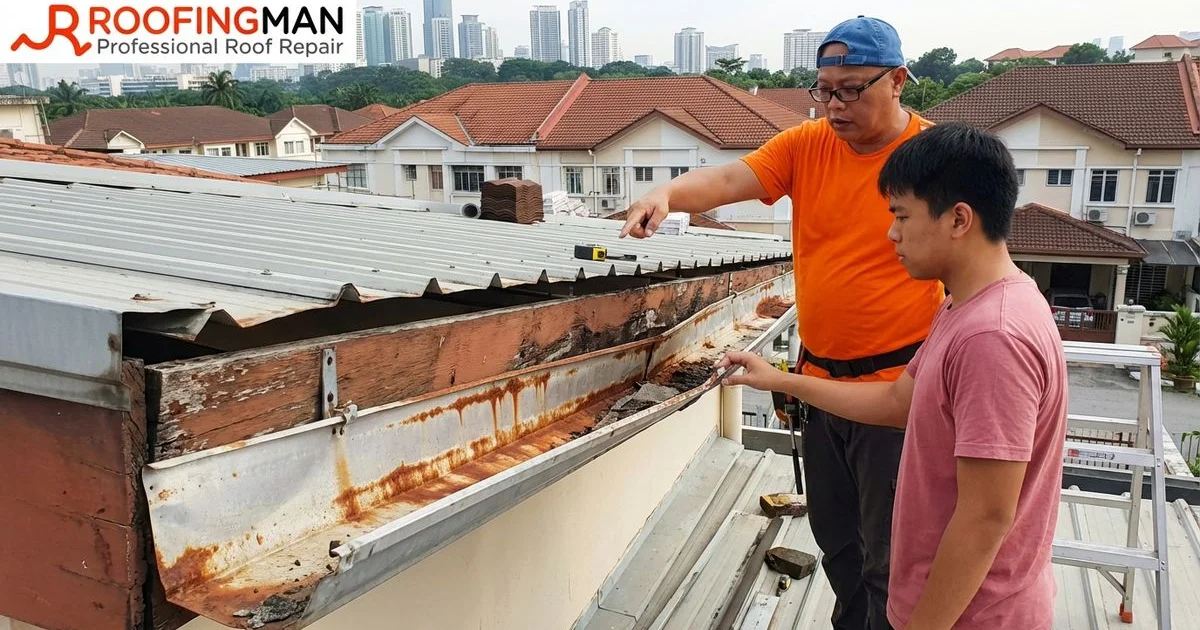
Do Not Ignore These Gutter Warning Signs
Your gutter system works silently in the background, directing rainwater away from your roof, walls, and foundation every time it rains. In Malaysia, where annual rainfall can exceed 3,000 millimetres in some regions, your gutters handle an enormous volume of water throughout the year. When they start to fail, the problems they cause can be far more expensive than the gutters themselves.
The challenge is that gutter damage often develops gradually. A small sag becomes a big sag. A tiny rust spot becomes a hole. By the time you notice water damage inside your home, the gutter problem may have been developing for months. Here are six warning signs every Malaysian homeowner should know, and what to do about each one.
1. Sagging or Pulling Away from the Fascia
When gutters start to sag or pull away from the fascia board, it is one of the most visible signs of trouble. You can often spot this from ground level — the gutter will look uneven, with sections dipping lower than others or visibly separating from the roofline.
What causes it: The most common cause in Malaysia is the weight of accumulated wet debris. Leaves, twigs, and sediment absorb water and become surprisingly heavy. Over time, this weight bends the gutter brackets and pulls screws from the fascia. Another common cause is timber fascia boards that have rotted from moisture exposure, meaning the screws no longer have solid wood to grip.
Repair or replace? If the gutter itself is in good condition and only the brackets or fascia are the issue, repair is usually sufficient. A professional can rehang the gutters with new brackets and reinforce or replace damaged fascia sections. If the gutter material itself has warped or bent permanently, replacement of that section is the better option.
2. Overflow During Rainstorms
If you see water pouring over the edges of your gutters during a storm — rather than flowing through the downpipes — something is wrong. This is especially noticeable during Malaysia’s heavy afternoon thunderstorms and monsoon downpours.
What causes it: The most common cause is a simple blockage. Leaves, debris, or even a bird’s nest can obstruct the flow of water to the downpipe. However, overflow can also indicate that your gutters are undersized for your roof area, or that the slope (fall) of the gutter is incorrect, preventing water from reaching the downpipe efficiently.
Repair or replace? Start with a thorough cleaning. If overflow continues after cleaning, a professional should check the gutter sizing and slope. You may need to add additional downpipes, resize the gutters, or adjust the gradient. In some cases, upgrading to a larger gutter profile solves the problem permanently.
3. Rust, Corrosion, or Visible Holes
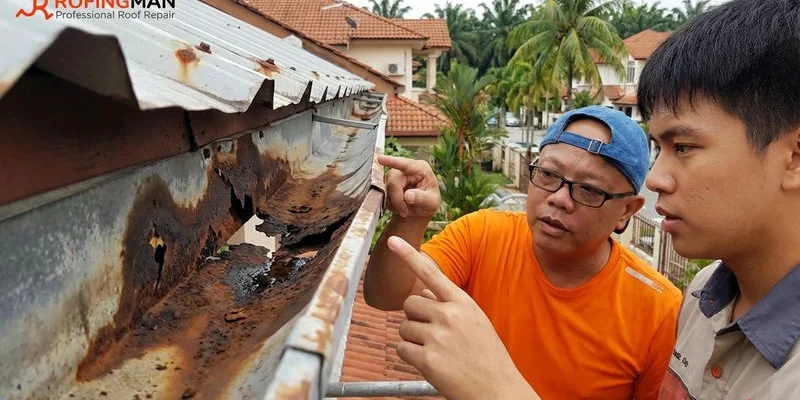
Metal gutters — particularly galvanised iron, which is still common on older Malaysian homes — are susceptible to rust. Malaysia’s humid tropical climate accelerates corrosion, especially in coastal areas where salt air is a factor.
What causes it: Constant exposure to moisture, combined with high humidity and occasional standing water from partial blockages, creates ideal conditions for rust. Once rust begins, it eats through the metal progressively, eventually creating holes that allow water to drip through.
Repair or replace? Small rust spots can be treated with rust converter and sealed with gutter sealant as a temporary measure. However, if rust is widespread or holes have formed in multiple locations, replacement is the more cost-effective long-term solution. Consider upgrading to UPVC or aluminium gutters, which do not rust and are better suited to Malaysia’s climate.
4. Water Stains or Mould on Exterior Walls
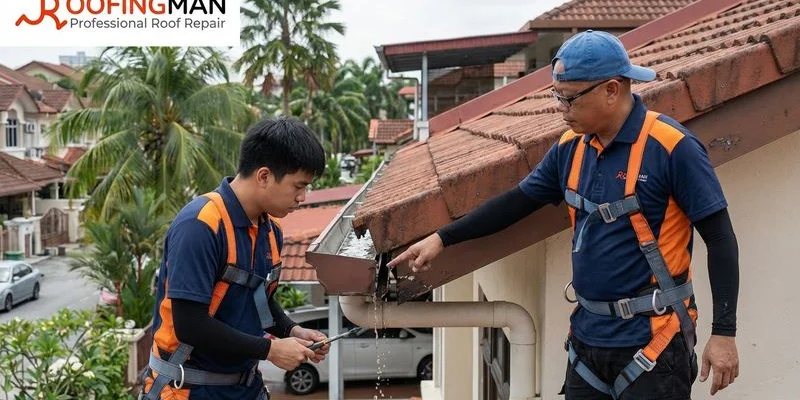
Brown, green, or black stains running down your exterior walls directly below the gutter line are a clear indicator that water is not being properly channelled away. These stains are caused by water consistently overflowing or leaking from the same spot.
What causes it: A crack, hole, or poor joint seal in the gutter allows water to escape at a specific point. Alternatively, the gutter may be overflowing at a particular section due to incorrect slope or a localised blockage. In Malaysia’s humid climate, these consistently damp areas quickly develop mould and algae, making the staining worse over time.
Repair or replace? Identify the source of the leak. If it is a joint issue, resealing with appropriate gutter sealant often solves the problem. If the staining is extensive and coming from multiple points, a more comprehensive inspection is needed to determine whether repair or partial replacement is warranted. The wall stains themselves may need cleaning with a mould-removal solution and repainting.
5. Water Pooling Near Your Foundation
After a rainstorm, walk around the perimeter of your home and look for areas where water is pooling against or near your foundation walls. This is one of the most serious consequences of gutter failure, and it often goes unnoticed because homeowners do not think to check at ground level.
What causes it: When gutters overflow, are clogged, or when downpipes are disconnected or improperly directed, rainwater dumps directly next to your foundation instead of being carried away. Over repeated rain events, this saturates the soil around your foundation.
Repair or replace? This issue requires a two-part solution. First, fix the gutter problem causing the overflow — whether that is cleaning, repairing, or replacing sections. Second, ensure your downpipes extend far enough from the foundation (at least 1.5 metres) and that the ground slopes away from the building. In serious cases, you may need to install a ground-level drainage system to redirect water away from the foundation.
6. Visible Gaps, Cracks, or Separated Joints
Walk around your home on a dry day and look up at your gutter system. Can you see daylight between gutter sections? Are there visible cracks in the material? Do the joints between sections look separated or poorly sealed?
What causes it: UPVC gutters can crack from prolonged UV exposure — Malaysia’s intense equatorial sun degrades plastic over years. Metal gutters expand and contract with temperature changes, which can loosen joints and break sealant bonds. Poor initial installation, including insufficient use of sealant or incorrect bracket spacing, also leads to separation over time.
Repair or replace? Individual cracks in UPVC gutters can sometimes be repaired with PVC cement or specialised gutter repair tape, but these are typically temporary fixes. Separated joints can be resealed. However, if cracking is widespread — a sign that the UV degradation is advanced — full replacement is the better investment. Modern UPVC gutters come with UV stabilisers that offer much better longevity than older products.
When to Repair vs When to Replace
As a general rule, consider these guidelines when deciding between repair and replacement for your Malaysian home.
Repair makes sense when:
- The damage is localised to one or two sections
- The gutter system is less than 10 years old
- The issue is related to brackets, joints, or minor blockages
- The overall gutter material is still in good condition
Replacement makes sense when:
- Multiple sections show damage or deterioration
- The gutter system is more than 15 years old
- You are experiencing recurring problems despite repeated repairs
- The gutter material is outdated (e.g., old galvanised iron)
- You want to upgrade to a more durable material
Do Not Wait Until the Next Monsoon
Gutter problems do not fix themselves, and they almost always get worse with time. What starts as a minor sag or a small rust spot today can become a major water damage issue after the next monsoon season. If you have noticed any of the six warning signs above, take action now while the weather is dry and repairs are straightforward.
A professional gutter inspection typically takes less than an hour and gives you a clear picture of your gutter system’s condition. From there, you can make an informed decision about whether repair, partial replacement, or a full upgrade is the right choice for your home and budget.
Tags
Need Professional Help?
If you're dealing with this issue, our team can help. Get an honest quote today.