
Clay Tile vs Concrete Tile vs Metal Roof: A Malaysian Homeowner's Guide
Compare the most popular roofing materials in Malaysia — cost, durability, heat performance, and maintenance needs for each type.
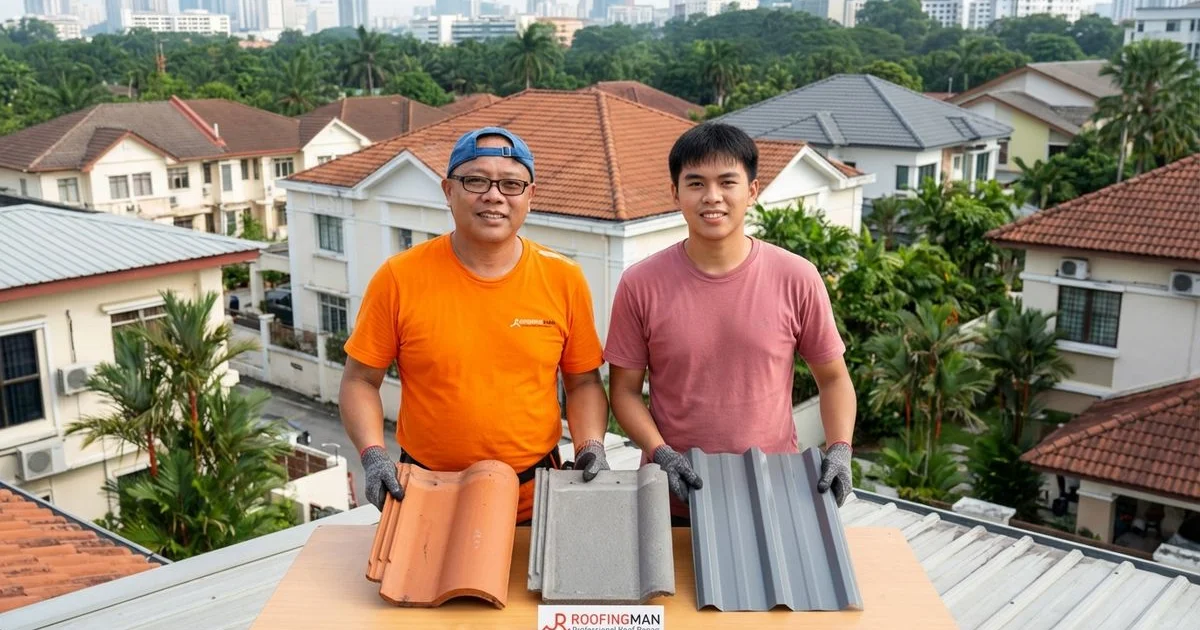
Choosing the Right Roofing Material for Malaysian Homes
When it is time to build a new roof or replace an old one, the material you choose affects everything — how much you pay upfront, how long the roof lasts, how hot your home gets, and how much maintenance you need to do over the years. In Malaysia, three roofing materials dominate the residential market: clay tiles, concrete tiles, and metal roofing.
Each has distinct advantages and drawbacks, and the best choice depends on your budget, your home’s structure, your climate zone within Malaysia, and your personal priorities. This guide compares all three materials across the factors that matter most to Malaysian homeowners.
Quick Comparison Table
| Factor | Clay Tiles | Concrete Tiles | Metal Roofing |
|---|---|---|---|
| Cost per sq ft | RM8 - RM15 | RM4 - RM8 | RM6 - RM12 |
| Lifespan | 30 - 50+ years | 20 - 30 years | 25 - 40 years |
| Weight | Heavy (55-65 kg/m²) | Heavy (45-55 kg/m²) | Light (5-10 kg/m²) |
| Heat insulation | Excellent | Good | Poor (without insulation) |
| Noise in rain | Quiet | Quiet | Loud (without insulation) |
| Maintenance | Low | Moderate | Low |
| Wind resistance | Moderate | Good | Excellent |
| Colour options | Limited (natural tones) | Wide range | Wide range |
| Ideal for | Premium homes | Budget-friendly homes | Large spans, modern design |
Clay Tiles: The Premium Traditional Choice
Clay tiles have been used in Malaysian construction for generations. Made from natural clay fired at high temperatures, these tiles are prized for their aesthetic appeal, natural heat insulation, and exceptional longevity.
Advantages of Clay Tiles
Outstanding heat performance: Clay tiles provide some of the best natural heat insulation of any roofing material. The dense clay body absorbs heat slowly during the day and releases it gradually, reducing peak indoor temperatures by 3-5°C compared to metal roofing. In Malaysia’s hot climate, this translates directly to lower air conditioning costs.
Exceptional lifespan: Quality clay tiles can last 50 years or more with minimal maintenance. Many colonial-era buildings in Penang and Malacca still have their original clay tile roofs in serviceable condition — a testament to the material’s durability.
Natural aesthetics: Clay tiles develop a patina over time that many homeowners find attractive. They are available in natural earth tones — terracotta, brown, grey, and cream — that complement traditional and contemporary Malaysian architecture.
Environmentally friendly: Clay is a natural material that can be recycled. Clay tiles contain no harmful chemicals and are inert, meaning they do not release any volatile compounds under heat exposure.
Disadvantages of Clay Tiles
Highest cost: Clay tiles are the most expensive common roofing material in Malaysia, both for materials and installation. The heavier weight requires stronger roof structures, adding to construction costs.
Fragile when walked on: Individual clay tiles can crack under foot traffic, making maintenance and repairs more delicate. Roofers need to use crawl boards when working on clay tile roofs.
Heavy weight: At 55-65 kg per square metre, clay tiles exert significant load on the roof structure. Older homes being re-roofed with clay tiles may need structural reinforcement, adding RM5,000 to RM15,000 to the project.
Limited colour range: Unlike concrete tiles or metal, clay tiles are limited to natural earth tones. If you want a bright blue or green roof, clay is not the right choice.
Concrete Tiles: The Budget-Friendly Workhorse
Concrete tiles are the most commonly used roofing material in Malaysian residential construction, particularly in terrace houses, semi-detached homes, and mid-range bungalows. They offer a practical balance of affordability, durability, and decent heat performance.
Advantages of Concrete Tiles
Most affordable option: Concrete tiles cost roughly half the price of clay tiles per square foot, making them the go-to choice for budget-conscious homeowners and property developers. This is why the majority of Malaysian terrace houses are built with concrete tiles.
Wide colour selection: Concrete tiles can be manufactured in virtually any colour and can mimic the appearance of clay tiles, slate, or even wood shakes. This gives homeowners significant design flexibility.
Good weight for wind resistance: The substantial weight of concrete tiles (45-55 kg/m²) provides natural wind resistance without the need for additional fixing. This is beneficial during Malaysia’s occasional severe thunderstorms.
Readily available: Concrete tiles are manufactured locally throughout Malaysia, meaning materials are easy to source and replacements for common profiles are available at most hardware stores.
Disadvantages of Concrete Tiles
Shorter lifespan than clay: Concrete tiles typically last 20-30 years before they need replacement. The surface coating that provides colour and water resistance wears away over time, leaving the porous concrete body exposed to water absorption.
Prone to moss and algae: In Malaysia’s humid climate, concrete tiles are particularly susceptible to moss and algae growth, especially on shaded roof surfaces. This growth traps moisture against the tile surface, accelerating deterioration and requiring periodic cleaning.
Colour fading: The factory-applied colour coating on concrete tiles fades significantly over 10-15 years of UV exposure. While this is primarily an aesthetic issue, it can also indicate that the tile’s water-resistant coating is wearing thin.
Weight considerations: Like clay tiles, concrete tiles are heavy and require a properly engineered roof structure. They are not suitable for lightweight steel frame construction without reinforcement.
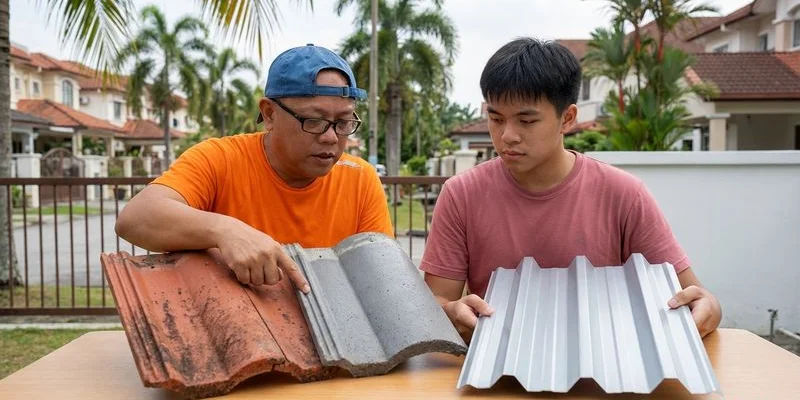
Metal Roofing: The Modern Lightweight Solution
Metal roofing has grown rapidly in popularity in Malaysia over the past two decades, moving from purely industrial and commercial use to mainstream residential applications. Modern metal roofing systems bear little resemblance to the basic zinc sheets of the past.
Types of Metal Roofing Available in Malaysia
- Zincalume: Steel coated with zinc-aluminium alloy. Good corrosion resistance, unpainted. Cost: RM6-RM8 per sq ft.
- Colorbond: Pre-painted zincalume steel. Wide colour range, good UV resistance. Cost: RM8-RM12 per sq ft.
- Standing seam: Premium metal roofing with concealed fasteners. Sleek modern appearance. Cost: RM10-RM15 per sq ft.
- Metal tile profile: Metal sheets pressed to resemble traditional tiles. Combines metal benefits with tile aesthetics. Cost: RM9-RM14 per sq ft.
Advantages of Metal Roofing
Extremely lightweight: At 5-10 kg per square metre, metal roofing weighs roughly one-tenth of clay or concrete tiles. This reduces structural requirements, can allow re-roofing over existing structures without reinforcement, and puts less stress on the building over time.
Superior wind resistance: Metal roofing panels are screwed directly to purlins, providing excellent resistance to uplift forces during storms. This is particularly valuable in Malaysia’s east coast states during monsoon season.
Long lifespan: Quality zincalume and colorbond roofing lasts 25-40 years, with some manufacturers offering 25-year warranties on both materials and colour fastness.
Fast installation: Metal roofing covers large areas quickly compared to individual tile laying, reducing labour time and costs. A typical terrace house re-roofing can be completed in 2-3 days versus 5-7 days for tiles.
No moss or algae issues: The smooth, painted surface of metal roofing discourages biological growth, reducing maintenance requirements in Malaysia’s humid environment.
Disadvantages of Metal Roofing
Poor heat insulation without treatment: This is the single biggest drawback of metal roofing in Malaysia. Metal conducts heat rapidly, and without proper insulation, indoor temperatures can be 5-8°C higher than under tile roofs. However, this can be mitigated with:
- Reflective insulation foil (sisalation) under the roof — adds RM2-RM4 per sq ft
- Polyurethane foam insulation — adds RM4-RM8 per sq ft
- Ventilated air gap between metal and ceiling
Noise during heavy rain: Metal roofing is significantly louder than tile roofing during Malaysia’s frequent thunderstorms. Insulation helps but does not completely eliminate the noise. This is a common complaint from homeowners who switch from tile to metal.
Denting and cosmetic damage: While structurally durable, metal roofing can dent from falling branches or heavy hail (rare in Malaysia). Dents are usually cosmetic but cannot be easily repaired without panel replacement.
Thermal expansion noise: Metal roofing panels expand and contract with temperature changes, sometimes producing ticking or popping noises during the heat of the day. This is more noticeable with lighter-coloured metal in single-storey homes.
Which Material Is Best for Your Home?
Choose Clay Tiles If:
- You are building a premium home and want the best long-term value
- Heat insulation is a top priority and you want to minimise air conditioning costs
- You value traditional aesthetics and natural materials
- Your budget allows for the higher upfront investment
Choose Concrete Tiles If:
- You want a reliable, proven roofing material at the lowest cost
- Your roof structure is designed for tile weight (most standard Malaysian homes)
- You want colour variety at an affordable price
- You are building or renovating a terrace house or standard semi-detached home
Choose Metal Roofing If:
- You need a lightweight solution for an existing structure or large span
- You want the fastest installation with minimal disruption
- You prioritise low maintenance over the roof’s lifetime
- You are willing to invest in proper insulation to offset heat and noise
Final Thoughts
There is no single “best” roofing material — only the best material for your specific situation. Consider your budget not just for today but over the next 20-30 years when factoring in maintenance and replacement costs. A cheaper material that needs replacing in 20 years may cost more overall than a premium material that lasts 40 years.
Whatever material you choose, the quality of installation matters as much as the material itself. A well-installed concrete tile roof will outperform a poorly installed clay tile roof every time. Invest in a qualified, experienced roofing contractor who specialises in your chosen material.
Tags
Need Professional Help?
If you're dealing with this issue, our team can help. Get an honest quote today.