
Emergency Roof Leak? Here's What to Do Right Now
Step-by-step guide on what to do when your roof starts leaking during heavy rain. Minimize damage while waiting for professional repair.
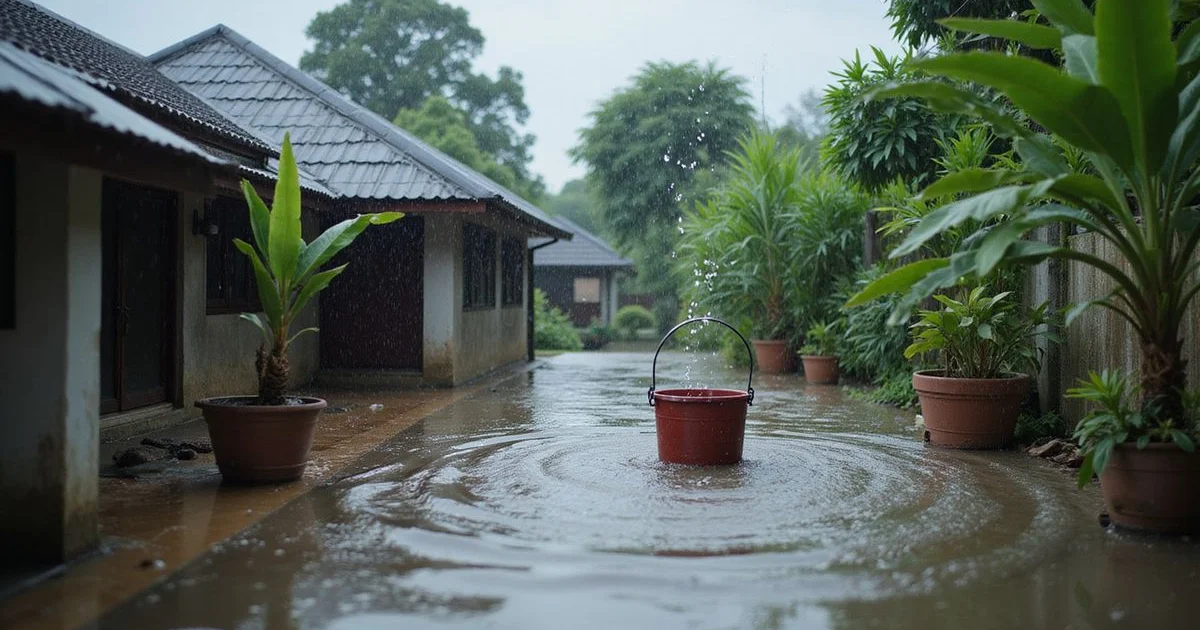
When Water Starts Coming Through Your Ceiling
It is 3am, the monsoon rain is pounding against your roof, and you wake up to the sound of dripping water. Or perhaps you come home from work to find a growing puddle on your living room floor. A roof leak during heavy rain is stressful, but how you respond in the first few hours can make a significant difference in how much damage your home sustains.
This guide walks you through exactly what to do when you discover an active roof leak, step by step, to protect your home and belongings until a professional can carry out a permanent repair.
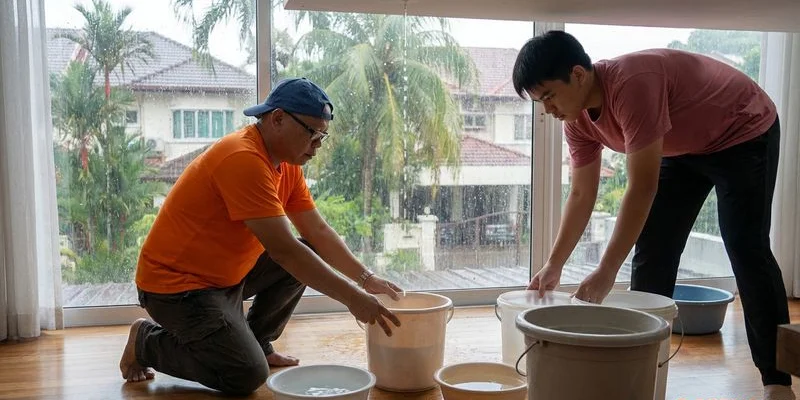
Step 1: Contain the Water
Your immediate priority is to prevent water from spreading and causing more damage.
Place Containers Under Drip Points
Use buckets, basins, pails, or any waterproof container to catch dripping water. Place old towels or newspapers around the containers to catch splashes. If the drip is fast, use your largest container and empty it regularly.
Move Furniture and Valuables
Quickly move electronics, important documents, and valuable items away from the affected area. If furniture is too heavy to move, cover it with plastic sheets, trash bags, or even shower curtains as a temporary barrier.
Protect Your Flooring
Lay plastic sheeting or old towels across the floor beneath the leak area. Water damage to timber flooring or laminate can be expensive to repair — often more costly than the roof repair itself.
Step 2: Relieve Ceiling Water Pressure
If you notice your ceiling bulging or sagging in a particular spot, water is pooling above the ceiling board. This is dangerous because a waterlogged ceiling can collapse without warning.
How to Safely Drain a Ceiling Bulge
- Place a large bucket directly beneath the bulge
- Stand on a stable chair or step ladder (not a stack of furniture)
- Use a screwdriver or sharp object to puncture a small hole at the lowest point of the bulge
- Let the water drain into the bucket in a controlled manner
- You may need to make the hole slightly larger if the water is not flowing freely
This might seem counterintuitive — putting a hole in your ceiling — but it is far better than having an entire ceiling panel collapse onto your furniture. A small puncture is easily patched later.
Step 3: Document Everything
Before you clean up, take photographs and video of:
- The leak source — where water is entering
- All water damage — stains, puddles, damaged items
- The exterior — if safe, photograph any visible roof damage from ground level
- Timestamps — your phone camera records date and time automatically
This documentation is essential for insurance claims and for your roofing contractor to understand the scope of the problem.
Step 4: Attempt a Temporary Exterior Fix (Only If Safe)
Important safety warning: Do not climb onto your roof during rain, strong winds, or darkness. Wet roof surfaces are extremely slippery, and the risk of a fall is not worth any temporary fix.
If the rain has stopped and conditions are safe, you can attempt these temporary measures from a ladder:
Tarp Coverage
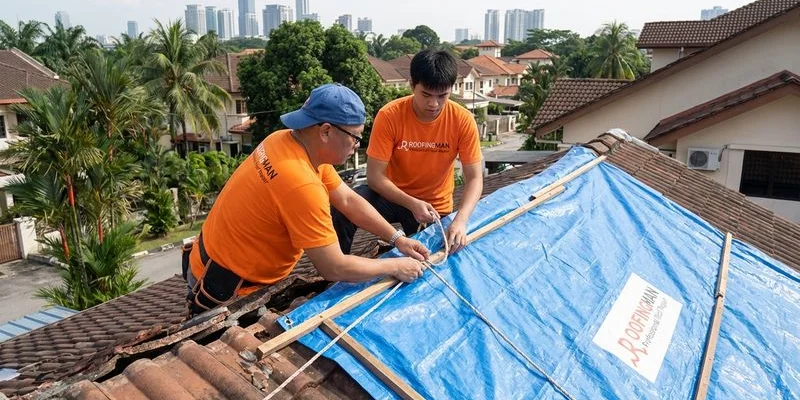
A plastic tarpaulin (available at most hardware stores for RM20-RM50) can be draped over the damaged area and weighted down with bricks or sandbags. The tarp should extend at least one metre beyond the damaged area in all directions, and it should be positioned so water flows down and off rather than pooling on the tarp.
Temporary Sealant
For small, visible cracks in tiles, a temporary application of roofing sealant or even silicone caulk can slow the leak until a professional arrives. This is not a permanent fix, but it can reduce water entry during subsequent rain.
Step 5: Turn Off Electrical Appliances
Water and electricity are a dangerous combination. If the leak is near any electrical fittings, switches, or wiring:
- Turn off the circuit breaker for the affected area at your main distribution board
- Do not touch any electrical switches, outlets, or appliances that are wet or near water
- Call a licensed electrician if you suspect water has entered any electrical fittings
In Malaysia, your home’s main switch (ELCB/RCCB) should trip automatically if water causes a fault, but do not rely on this — take the safe approach and switch off manually.
Step 6: Call a Professional Roofer
Contact a roofing contractor as soon as possible. During monsoon season (November to March on the west coast, October to February on the east coast), reputable roofers are in high demand, so call early.
What to Tell the Roofer
Provide as much detail as possible:
- When the leak started — during rain, or did you notice it after rain stopped?
- Location — which room, which floor, which part of the ceiling?
- Severity — steady drip, multiple drips, or flowing water?
- Roof type — concrete tiles, clay tiles, metal sheets?
- Access — is the roof easily accessible, or is it a multi-storey building?
Emergency vs Scheduled Repair
If the leak is actively causing significant damage — water flowing rather than dripping, ceiling at risk of collapse, or electrical hazard — request an emergency call-out. Expect to pay a premium of 30-50% for emergency service. If the leak is manageable with containers and you have successfully contained it, a next-day or scheduled appointment will save you money.
Step 7: Follow Up After the Rain Stops
Once the immediate crisis is over:
- Check your attic — if you have an accessible roof space, inspect for wet insulation, water trails on rafters, and any daylight showing through the roof
- Monitor the area — watch for signs that the leak worsens during subsequent rain
- Do not delay permanent repair — a temporary fix is just that, temporary. Schedule the proper repair before the next heavy rainfall
- File an insurance claim — if the damage is significant, contact your home insurance provider with your documentation
Prevention for Next Time
After your roof is professionally repaired, take these steps to prevent future emergencies:
- Schedule an annual roof inspection, ideally before monsoon season
- Keep gutters and downpipes clear of debris
- Trim overhanging tree branches that could damage tiles during storms
- Address small cracks and gaps immediately — do not wait for them to become leaks
An emergency roof leak is never convenient, but staying calm, acting systematically, and calling in professional help quickly will minimise the damage to your home and your wallet.
Tags
Need Professional Help?
If you're dealing with this issue, our team can help. Get an honest quote today.