
5 Tips for Waterproofing Your Balcony and Car Porch
Prevent water seepage in your balcony and car porch with these practical waterproofing tips. Common solutions for Malaysian terrace homes.
Why Balconies and Car Porches Are Problem Areas
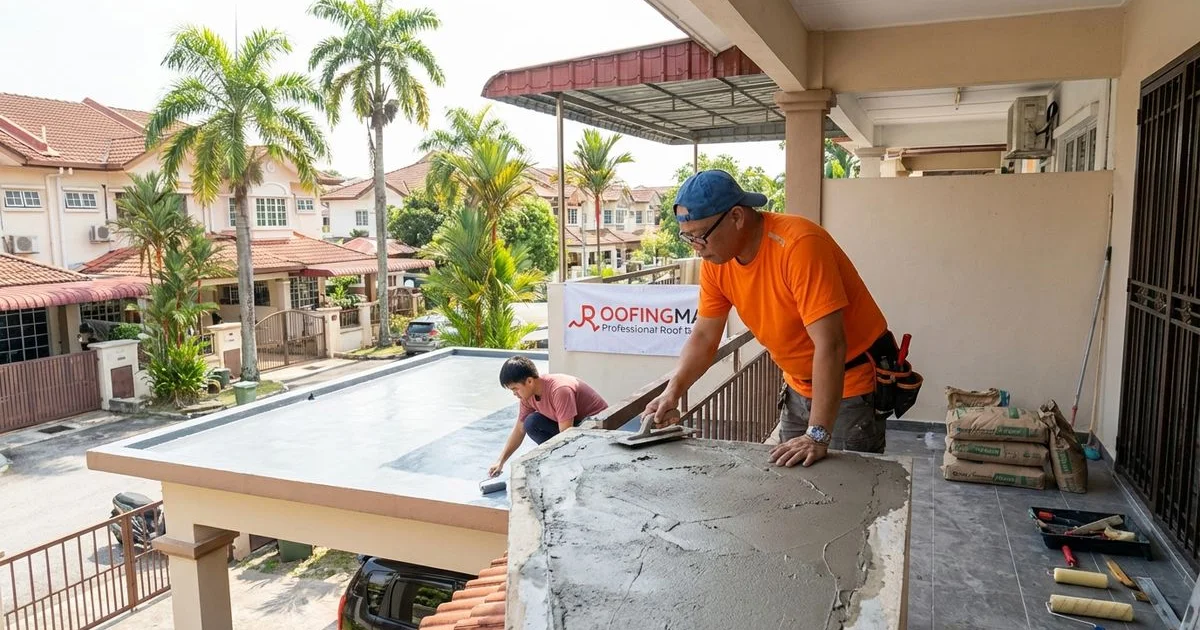
If you own a terrace house in Malaysia, chances are you have dealt with water seepage in your balcony or car porch at some point. These areas are especially vulnerable because they are flat or low-slope concrete surfaces directly exposed to Malaysia’s heavy monsoon rains. Unlike your main pitched roof that sheds water quickly, flat surfaces allow water to pool, and over time that pooling water finds every crack and weakness in the concrete.
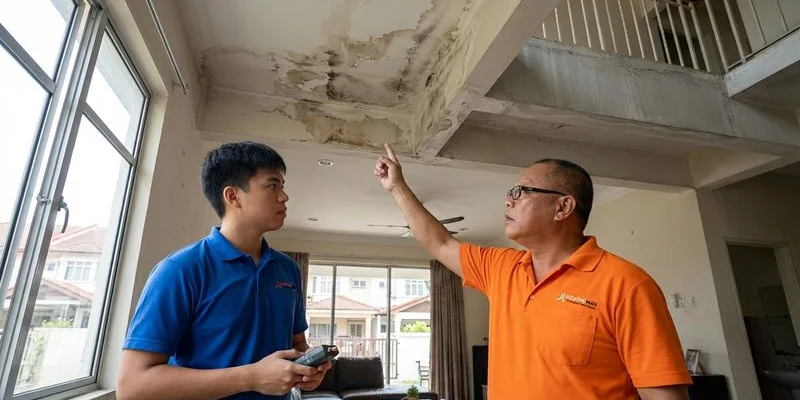
The result is familiar to millions of Malaysian homeowners: water stains on the ceiling below, peeling paint, damp patches on walls, and in severe cases, structural damage to the reinforcing steel inside the concrete. The good news is that most balcony and car porch water problems can be prevented or fixed with the right approach.
Here are five practical tips that address the most common causes of water seepage in Malaysian terrace homes.
Tip 1: Fix the Drainage Before You Waterproof
The single most important factor in keeping your balcony and car porch dry is proper drainage. Before spending money on waterproofing coatings, check that water can actually flow away from the surface efficiently.
What to check:
- Floor slope: Your balcony floor should slope at least 1-2% towards the drain outlet. If water pools anywhere on the surface after rain, the slope is insufficient and needs correction.
- Drain outlets: Make sure drain holes are not blocked by debris, leaves, or hardened cement. Clean them out thoroughly.
- Scupper drains: Many Malaysian terrace houses have scupper drains (openings in the parapet wall). Ensure these are clear and large enough to handle heavy downpours.
- Downpipes: Follow the drainage path all the way down. A blocked downpipe will cause water to back up and overflow onto the balcony surface.
If the slope is wrong, a screed layer can be applied to create proper fall towards the drain. This typically costs RM500 to RM1,500 depending on the area size, and it makes a dramatic difference in how well any waterproofing system performs.
Tip 2: Seal the Wall-to-Floor Junction Properly
The joint where the balcony floor meets the parapet wall or house wall is the most common leak point in Malaysian terrace homes. This junction experiences constant thermal movement — the concrete expands and contracts with daily temperature changes — which causes rigid sealants and cement fillets to crack over time.
The right approach:
- Apply a flexible polyurethane sealant along the wall-floor junction rather than rigid cement filler
- Use a cove or fillet strip to create a curved transition rather than a sharp 90-degree angle — water collects in sharp corners
- Extend the waterproofing membrane at least 150mm up the wall face, not just across the floor
- If tiles are installed, ensure the grout at the wall junction is supplemented with flexible sealant underneath
Many homeowners make the mistake of simply re-grouting the tile joint where the floor meets the wall. Grout is not waterproof and will crack again within months. A proper flexible sealant underneath the visible grout line is essential for a lasting fix.
Tip 3: Choose the Right Waterproofing System for Your Situation
Not all waterproofing products are suitable for balconies and car porches. The right choice depends on whether you have tiles, the amount of foot traffic, and your budget.
For tiled balconies and car porches:
- Under-tile membrane: If you are re-tiling, apply a liquid membrane waterproofing (such as polyurethane or acrylic-based coating) directly on the concrete screed before laying new tiles. This is the most effective approach. Cost: RM6-RM10 per sq ft plus tiling.
- Tile-over coating: If you want to avoid removing existing tiles, specialised tile-over waterproofing coatings can be applied directly on top of the tile surface. These create a new waterproof walking surface. Cost: RM8-RM15 per sq ft.
For exposed concrete (no tiles):
- Acrylic waterproof coating: A cost-effective option that provides a coloured, waterproof surface. Apply two to three coats with fibreglass mesh reinforcement at joints. Cost: RM4-RM8 per sq ft.
- Polyurethane liquid membrane: More durable and flexible than acrylic, ideal for areas with significant movement. Cost: RM8-RM12 per sq ft.
Avoid using standard exterior paint as a waterproofing solution. Paint provides UV protection and aesthetics, but it is not designed to bridge cracks or resist hydrostatic pressure. True waterproofing products are formulated to remain flexible and impermeable.
Tip 4: Address Cracks and Concrete Damage First
Applying waterproofing over cracked or damaged concrete is like putting a plaster over a wound that has not been cleaned — it may look fine temporarily, but the underlying problem will resurface.
Before any waterproofing application:
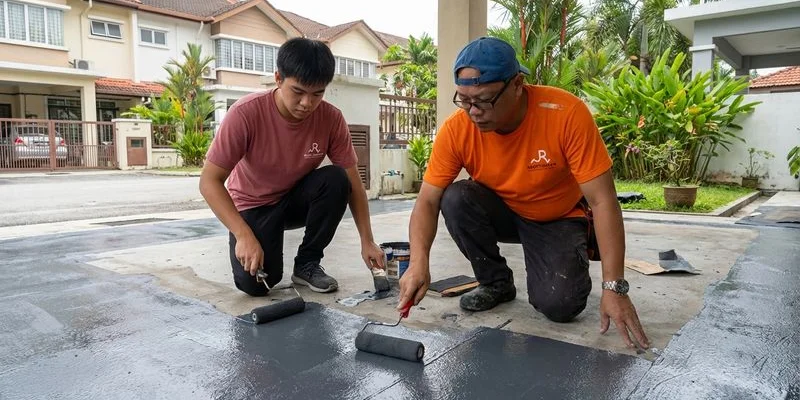
- Inspect for cracks: Hairline cracks (under 0.3mm) can be sealed with the waterproofing membrane itself. Larger cracks need to be chased out and filled with a flexible repair mortar.
- Check for spalling: If you see exposed steel reinforcement (rebar) or concrete chips breaking away, this indicates carbonation damage. The steel must be treated with anti-corrosion primer and the concrete repaired before waterproofing.
- Remove loose material: All flaking paint, loose cement, and deteriorated old waterproofing must be completely removed. Waterproofing bonds to the surface — if that surface is weak, the entire system fails.
- Test for dampness: If the concrete is actively wet from below (rising damp), surface-applied waterproofing will not adhere properly. The moisture source needs to be identified and addressed first.
Surface preparation typically accounts for 30-40% of a professional waterproofing job’s cost, and it is where most DIY attempts fall short. Cutting corners on preparation is the most common reason waterproofing fails within the first year.
Tip 5: Maintain Your Waterproofing Regularly
Even the best waterproofing system has a limited lifespan, especially under Malaysia’s harsh UV exposure and thermal cycling. Regular maintenance extends that lifespan significantly and catches small problems before they become expensive repairs.
Maintenance schedule:
- Monthly: Clear all drain outlets of leaves and debris, especially during monsoon season (October to March)
- Every 6 months: Inspect sealant joints at wall-floor junctions for cracking or separation. Re-apply flexible sealant where needed.
- Annually: Walk the entire surface and look for blistering, peeling, or discolouration in the waterproofing coating. Small areas of damage can be touched up with the same product.
- Every 3-5 years: Consider applying a fresh topcoat of waterproofing over the existing membrane. This “maintenance coat” is much cheaper than a full re-waterproofing job and can extend the system’s life by several years.
Signs that waterproofing has failed and needs professional attention:
- Water stains appearing on the ceiling below the balcony or car porch
- Bubbling or blistering on the waterproof surface
- Visible cracks in the coating, especially at joints and edges
- Persistent damp smell in rooms below the waterproofed area
- Efflorescence (white powdery deposits) on the underside of the concrete slab
The Bottom Line
Balcony and car porch leaks are among the most common — and most frustrating — maintenance issues for Malaysian terrace house owners. However, they are also among the most preventable. Proper drainage, correct junction sealing, appropriate product selection, thorough surface preparation, and regular maintenance will keep these vulnerable areas dry for years. If water damage is already present, address it promptly — the longer you wait, the more extensive and expensive the repair becomes.
Tags
Need Professional Help?
If you're dealing with this issue, our team can help. Get an honest quote today.